
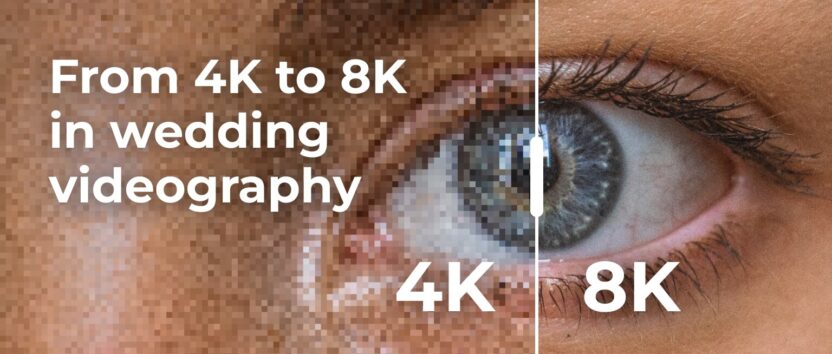
8K packs four times the pixels of 4K, and what that actually means for wedding work, with and without buying new gear, is the heart of this piece. It touches on cutting heavy footage in DaVinci Resolve via proxies, using AI to push existing 4K to 8K, and cameras spanning the budget Fujifilm X-H2 to the costlier Sony a1, capped by a brisk FAQ. Reading for videographers weighing whether the leap pays off.
Wedding videography has come a long way in recent years, from the early days of standard definition footage to the introduction of high definition 1080p video and, later, the stunning clarity of 4K resolution. More recently, 8K resolution has moved from the cutting edge into something you can actually buy and shoot with, even if 4K is still the everyday standard for wedding films. Whether you’re an established pro or newer to the field, it helps to understand where 8K genuinely fits, so you can decide when it’s worth reaching for and when 4K is still the smarter call.
In this post, we’ll explore what 8K is and how to switch to this resolution with and without changing your gear.
Step into the future with Bride&Groom.video already today
The benefits of shooting in 8K are undeniable, from capturing more detail and allowing for greater flexibility in post-production to future-proofing your content for emerging technologies.
As we can see, wedding video recording in 4K is now the norm. But what is 8K video and how does it differ from 4K? Simply put, 8K resolution is four times higher than 4K UHD and 16 times higher than Full HD.
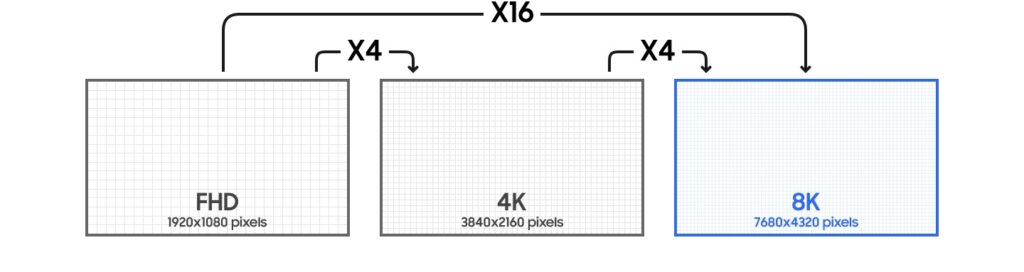
The higher the resolution, the more pixels fit on the screen size, increasing their density and making the image sharper and more realistic. This megapixel resolution provides a more immersive viewing experience, drawing the viewer into the action on the screen.
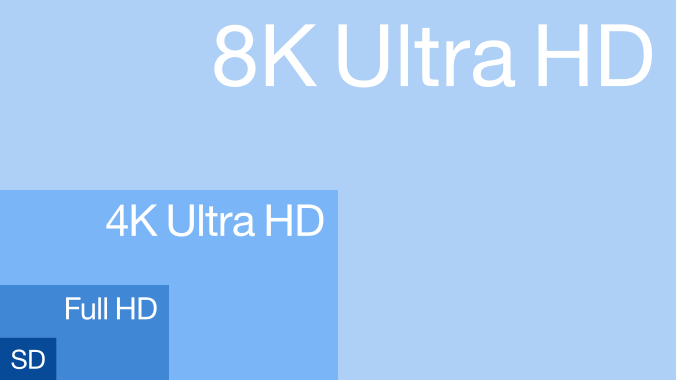
With each passing year, there are more opportunities to create a Hollywood-style picture. And this can be a key factor in capturing beautiful weddings. Of course, cameras that shoot in 4K provide high-quality images, but sooner or later, there will be new trends, and Bride&Groom are ready for them already now!
- The first thing we do is use professional editing software for weddings, such as DaVinci Resolve, which is considered the best for color correction.
- If we see that the program can’t handle high bitrate performance, we use 10-bit proxies.
- Even if you shoot in 4K, we’re ready to upscale your footage to 8K using our AI tools. AI work looks amazing! You can see it in action in the showreel below.


The screenshots show the main difference – 8K image have more sharpness, and the details of people’s faces are more distinct, which gives a significant advantage.
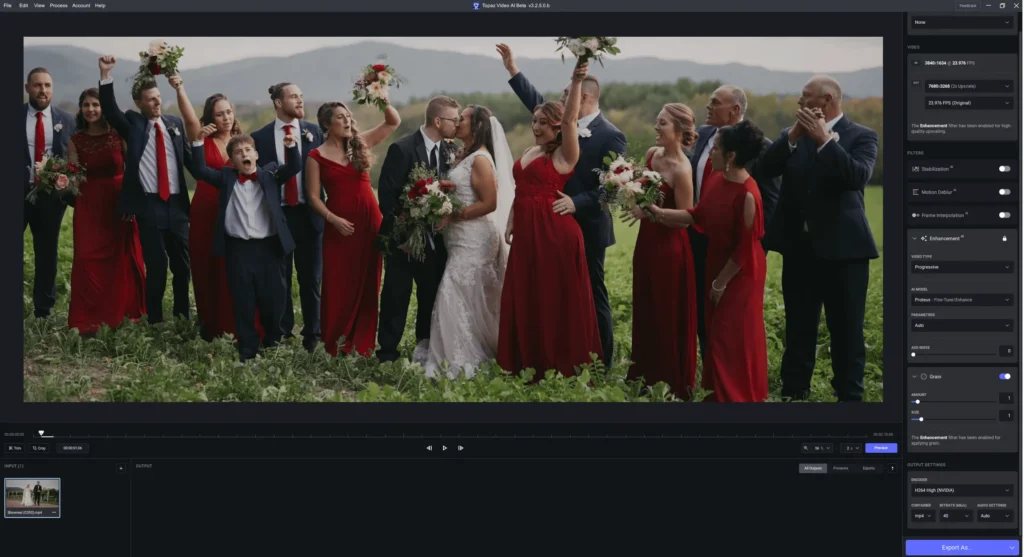
It is also worth noting that AI allows us to add the Grain effect. Grain prevents the image from being too smooth and can give a cinematic look, like on film cameras.
You can try new gear
Not long ago, 8K was mostly the domain of the film industry, shot on cinema cameras from RED, ARRI, and others, with phenomenal quality. Those top-tier bodies are still expensive, but the landscape has shifted a lot. In 2024 Nikon acquired RED, and cinema cameras have become far more accessible: the RED KOMODO, for example, now sells for around $2,995, a fraction of what an entry into that world used to cost. Even so, most of these cinema bodies still make more sense to rent than to own for a typical wedding.
More budget-friendly high-resolution options exist too, such as the Blackmagic URSA Cine 12K LF (around $9,495, down from its $14,995 launch price) and the RED KOMODO-X. Are these cameras good for weddings? It depends on your vision for shooting and post-production. But as our experience shows, most wedding shooters still prefer cameras with reliable autofocus, which is where hybrid mirrorless bodies come in.
On the autofocus side, several hybrid mirrorless cameras now shoot 8K. The Nikon Z8 (around $3,500) and its flagship sibling the Nikon Z9 are especially popular for events because they record 8K internally with essentially no recording-time limit, which matters for long ceremonies. The Canon EOS R5 Mark II (around $4,300) adds 8K/60p RAW and excellent autofocus, and the Sony a1 II (around $6,500) is the do-everything flagship. Older but still very capable options include the Sony a1, Nikon Z9, and Canon EOS R5 C.
Is there a camera that shoots above 4K for less than $4,000? Absolutely. The Fujifilm X-H2 still shoots 8K/30p and remains one of the best values in the category, though its price has crept up to around $2,500 body-only. If 6K is enough, Blackmagic covers that ground too: the full-frame Blackmagic Cinema Camera 6K (L-mount) is the current option at around $2,595, while the older Pocket Cinema Camera 6K and 6K Pro remain capable and affordable on the used market.
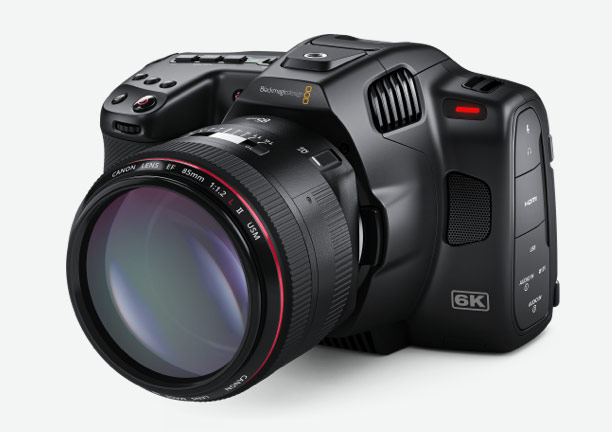
We’re not considering all existing cameras but giving examples of the modern camera market and what it is telling us if you want to change your gear.
Final words
The world of cinematography keeps evolving, and 8K, whether captured in-camera or reached through AI upscaling, is now a realistic way to push resolution and image quality further. Whether you upgrade your own gear or lean on us to upscale your 4K footage, the result is sharper, more detailed wedding films with real room to reframe in post. If you’d like a hand with your 8K edits, get in touch and we’ll take care of the rest.
FAQs
What is 8K resolution?
8K resolution is a video display format that offers approximately 8000 pixels of horizontal resolution, sixteen times that of 1080p resolution. It provides extremely sharp and detailed images but requires high-performance computing power to display and process.
What is the difference between 4K and 8K?
The main difference between 4K and 8K formats is their resolution. 4K (Ultra-High Definition, or UHD) offers approximately 4000 pixels of horizontal resolution, while 8K (Super-High Definition, or SHD) offers approximately 8000 pixels. This means that 8K displays have four times as many pixels as 4K displays.
What is the size of 8K video per minute?
The minute-long size of an 8K video can fluctuate depending on different aspects, including compression, bitrate, and codec employed. Nevertheless, as an approximation, assuming a 100 Mbps bitrate, an 8K video capturing 30 shots per second could consume around 7.5 GB of storage capacity per minute. In contrast, an 8K video capturing 60 frames per second with an identical bitrate could take up around 15 GB of storage per minute.
When will the world be using 8K video?
8K is already used in professional film and TV, and 8K-capable cameras are now common and affordable, from the Fujifilm X-H2 to hybrid flagships like the Nikon Z8. For consumers, though, everyday 8K viewing is still limited by displays and available content. In weddings, 4K remains the practical standard, while 8K is used more and more, both in-camera and through AI upscaling, mainly for extra detail and the freedom to crop and reframe in post.
What video resolution is best for wedding videos?
The best video resolution standards for wedding videos depend on various factors such as the intended use, budget, and equipment. In general, a resolution of at least 1080p (Full HD) is recommended for capturing and editing wedding videos. However, the most popular format at the moment is 4K. In addition, you can order AI resolution upscaling services and significantly improve the quality of your footage.
—
Terminology
Bitrate – the amount of data a video records per second, usually measured in megabits (Mbps). Higher bitrates mean better quality and much larger files, which is why 8K wedding footage takes up so much storage.
Codec – the compression method used to encode and play back video files. The codec affects both file size and how much computing power is needed to edit high-resolution wedding footage.
Frames per second (fps) – how many individual images a camera captures every second of video. Most 8K-capable cameras shoot up to 30 fps, and higher frame rates roughly double the storage a wedding shoot requires.
10-bit proxy – a compact stand-in copy of the original footage that keeps 10-bit color information intact. Editors use these proxies when high-bitrate 8K files are too heavy for smooth playback, then reconnect the originals for final output.
AI upscaling – using artificial intelligence to increase a video’s resolution, such as converting 4K wedding footage to 8K, by generating new pixels. It lets videographers deliver higher-resolution films without buying new cameras.
Grain – a film-like texture added during editing to keep upscaled footage from looking too smooth or digital. A light grain effect gives wedding films a more cinematic, organic feel.


