
Aerial footage can lift a wedding film, yet it suits some moments and ruins others (vows and cake cutting stay grounded). Beyond that judgment call, the piece covers the legal side (FAA Part 107, registration, and Remote ID), a pre-flight and shooting checklist, and three drones by budget: the DJI Mini 4 Pro / Mini 5 Pro, the DJI Air 3S, and the DJI Mavic 4 Pro. A level-headed intro for videographers eyeing aerial work, with the reminder that the edit is what makes the shots sing.
Every year, wedding planning differs more and more from the days when our parents said their vows. New technologies are visibly changing our lives, including how we celebrate and film weddings. No one is surprised by a wedding that is broadcast online or by an original wedding hashtag on social media.
Drone videography is another popular wedding trend in recent years. Our article will consider the pros and cons of drone video for wedding films.
What do drones do?
Drones allow videographers to capture large-scale footage from above, creating an incredibly immersive and dramatic effect for wedding videos. Aerial video filming adds a cinematic edge to wedding films and provides a unique emotional perspective.
Many Hollywood blockbusters begin with aerial footage, creating pleasant anticipation. Drone wedding videography technology uses the same effect, showing the wedding venue instead of epic battlefields or alien landing sites.
A videographer attaches a camera to a drone and controls it with a remote to film from the air. Aerial vehicles can climb over a mile high, but under US FAA rules they can fly no higher than 400 feet above the ground (limits differ in other countries). Even so, that height is plenty for capturing really impressive footage of the celebration.
What are the benefits of drone filming?
A drone video adds a whole new perspective to wedding videos. Of course, you should not film the entire wedding with a drone, as the celebration consists of many key moments that are better shot in alternative ways. For example, cake cutting, reading vows, etc.
Unusual drone footage will add life and variety to any wedding film. For example, aerial shooting can show off the wedding’s location, whether it’s a white-sand beach, a vineyard, or a luxurious estate, in an unforgettable, picturesque manner. And if a wedding is in an old church, imagine how impressive it will be to highlight the landscape from a bird’s-eye view.
Another benefit of shooting from the air is the ability to add extraordinary shots to your film. For example, you can shoot how your guests are gathering and then show it with an acceleration effect.
Here are the main advantages of drone wedding videography:
- Capture new perspectives beyond the usual vision from the ground.
- Record various objects from the air, such as landscapes and buildings.
- Drone aerial footage is much cheaper than previously available methods, such as shooting from a helicopter. A drone even allows you to shoot indoors with high ceilings.
Understanding guidelines and regulations
Using drones for filming is regulated, and for weddings it matters that this counts as commercial work. In the US, if a flight supports a business in any way, it falls under the FAA’s Part 107 rules rather than the recreational exception (when in doubt, the FAA says assume Part 107). To fly a wedding legally, you need three things.
First, a Part 107 Remote Pilot Certificate. You pass the FAA aeronautical knowledge exam (Unmanned Aircraft General, Small), and you must be at least 16 and able to read and speak English.
Second, FAA registration for your drone through FAADroneZone, which costs $5 per drone and is valid for three years. Under Part 107, each drone is registered separately, and even sub-250g drones must be registered when you fly them commercially. Mark the registration number on the outside of the drone and carry proof of registration whenever you fly.
Third, Remote ID. Since the rule took full effect in March 2024, any drone that has to be registered must also broadcast Remote ID, which transmits the drone’s ID and location along with the controller’s location during flight. Most newer drones, including current DJI models, have Standard Remote ID built in; otherwise you attach a Remote ID broadcast module. Liability insurance isn’t legally required, but it’s strongly recommended for professional shoots.
Some states have their own drone regulations. Regardless of where you intend to fly your drone, we recommend you follow the rules below:
- Learn the rules of safe drone control, and always use them.
- Always keep your drone in sight when flying.
- Fly no higher than 400 feet and no faster than 100 miles per hour.
- Keep your drone away from airplanes, airports, and emergency services.
- Get airspace authorization through LAANC before flying in controlled airspace (near airports). In uncontrolled airspace, you can fly up to 400 feet without it.
- Don’t fly directly over people, crowds, or moving vehicles without the proper FAA authorization.
- Make sure any footage you capture doesn’t violate privacy laws.
Rules vary by country. The US points above follow FAA regulations; other regions run their own systems (for example, EASA across the EU), so always check the local rules where you’re filming.
Following these simple rules will help you avoid getting into legal trouble while filming with your drone.
Planning stage
The preparatory stage for filming a wedding with a drone is no less important than the shooting process. We have prepared these helpful tips:
- Practice flying a drone. Piloting a drone can be more challenging than expected, especially if you are distracted by filming. Learn how to take off, stabilize your drone, create simple shapes, and land. Once you feel confident, you can start shooting with your drone.
- Set up your drone and camera. After takeoff, you cannot change the settings, so everything must be done in advance.
- Create a preflight checklist. This will help ensure you won’t forget anything, which means you will have good footage.
- Check the battery level. It is best to know how long your drone can stay in the air, and set the alarm for 10 minutes before the battery runs out so that you have time to land it . . . not on the guests’ heads.
- Prepare flight and shooting plans. Planning is the key to a successful drone shoot. Determine in advance what and how you want to shoot, and then you do not have to improvise in the air.
Filming stage
The filming stage is by far the most important of the entire process. No matter how you plan everything, if you fail at this stage, then you will not have good footage for your film.
For this stage, we also have some tips that will make your life easier:
- Choose perfect angles. Changing the camera angle can have a real visual impact. For example, you can experiment with low and high angles.
- Do not rush—act slowly but steadily. Making slow, controlled movements will give you the best drone footage. If you want to change the flight path or angle, it is better to make a few minor adjustments. Major changes can result in choppy footage that is hard to watch.
- Choose exciting objects. Beautiful buildings, local nature, picturesque landscapes—all this can beautify your film. Your drone footage will be as interesting as the objects you capture.
- Use all drone and camera features. Many drones have special shooting features, such as center points for better framing. Make the most of your drone for wedding footage.
Editing stage
Preparing properly and making good footage is only half the battle. How your wedding video turns out will be decided during editing. But video editing is a whole separate art. To create spectacular wedding films, you need to spend tens or even hundreds of hours learning and practicing.
Therefore, it is always better to turn to professionals who have already created thousands of successful wedding films. Our team has dozens of experienced editors who work in different programs and know all the nuances and trends of wedding video editing. When outsourcing your projects to us, you will save time and get professionally made films to delight your clients.
The best drones for wedding videography
There are many models of drones available on the market, so choosing the right one is not so easy. Their prices also vary greatly depending on the feature set, shooting resolution, battery, and other characteristics.
If you want a budget-friendly, travel-ready option, the DJI Mini 4 Pro (around $759) or the newer DJI Mini 5 Pro (around $799) are excellent. Both weigh under 250 grams, which means lighter regulation in many countries, yet they still deliver professional-grade footage, and the Mini 5 Pro is the first sub-250g drone with a 1-inch sensor. If you just need an entry-level drone to learn on, the DJI Mini 4K (around $299) is the cheapest way into the DJI ecosystem, and it often sells for less during promotions. Keep in mind that even a sub-250g drone must be FAA-registered when it’s flown commercially, as it is at a wedding.
In the mid-range, the DJI Air 3S (around $1,099) is the sweet spot and the best all-round choice for most shooters. It pairs a 1-inch main sensor with a 70mm medium-telephoto second camera, 4K/120fps video, roughly 45 minutes of flight time, LiDAR-assisted omnidirectional obstacle avoidance, and O4 transmission, plus smart modes like ActiveTrack 360.
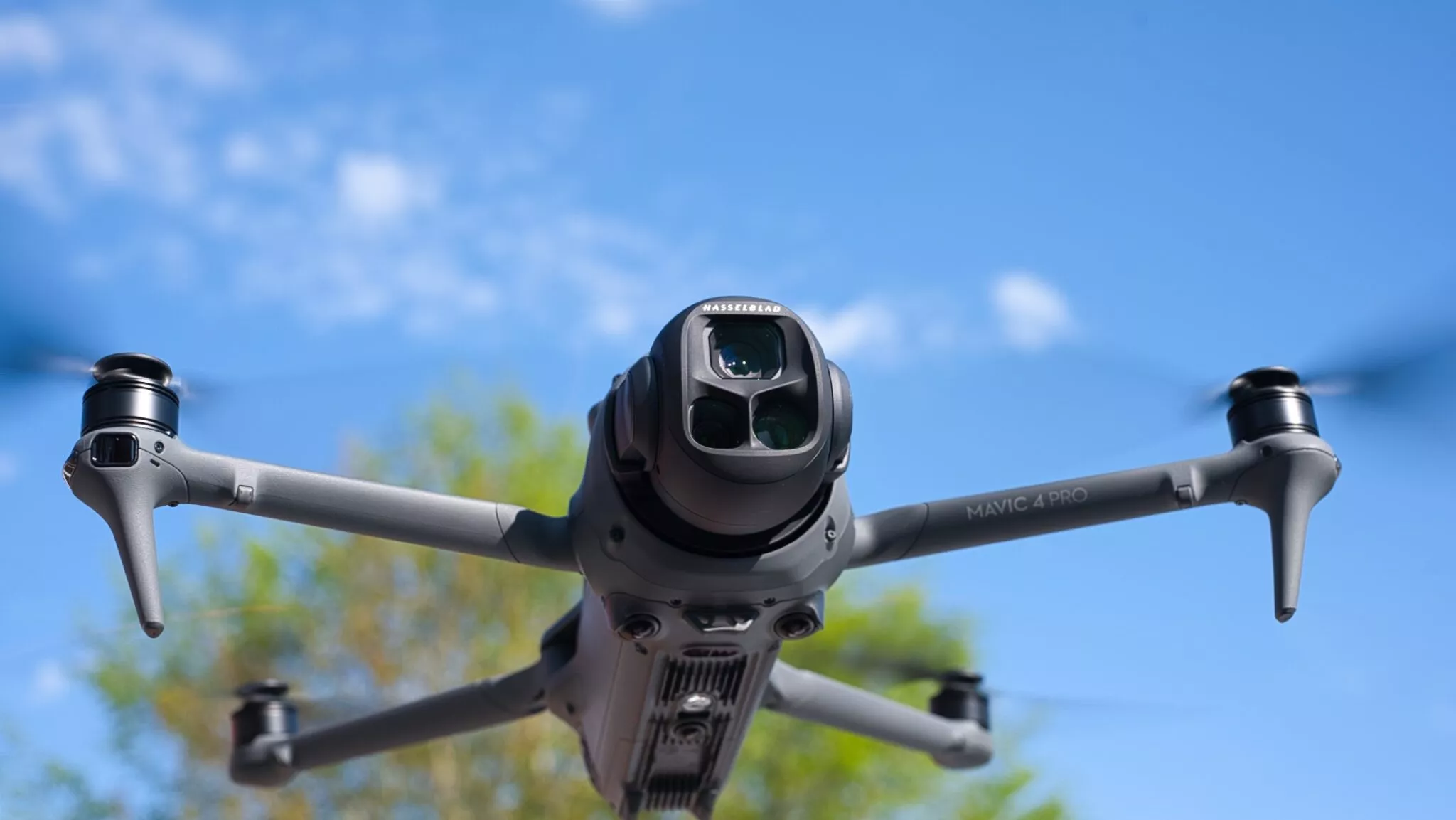
For a premium, professional drone, the DJI Mavic 4 Pro is the current flagship. It carries a triple-camera Hasselblad system built around a 100MP 4/3-inch main sensor, up to 6K HDR video, full 10-bit D-Log across all cameras, roughly 51 minutes of flight time, and a 360-degree gimbal. One thing to know for US readers: DJI hasn’t officially launched it in the States, so you’ll find it through third-party sellers rather than DJI directly. Prices there vary, so check the seller’s warranty terms before buying.
FAQs
How are drones used at weddings?
Drones are used to capture breathtaking footage of the celebration and the entire location from a bird’s-eye view. This will add a cinematic and epic quality to your wedding film.
Can I film a wedding with a drone?
Of course. But it is inadvisable to film the entire wedding with a drone. There are many important moments that should be captured in other ways.
Which drone has the best camera quality?
The DJI Mavic 4 Pro is one of the best drones on the market in 2026. Its Hasselblad camera and 4/3-inch sensor shoot up to 6K video with full 10-bit D-Log.
Do I need a license to fly a drone at a wedding?
In the US, yes. Wedding filming counts as commercial work, so you need an FAA Part 107 Remote Pilot Certificate, a registered drone, and Remote ID. Other countries have their own equivalents, so check the local rules where you’re filming.


