Spoken words carry much of a wedding film’s emotion, which is why vows and speeches get their own deep treatment here. After explaining the role of each, the post turns hands-on: a three-camera setup for letter readings and the ceremony, with focal lengths and a job for every camera (medium, close-up, wide), plus reminders to stabilize close-ups in camera and keep silent near lavalier mics. For videographers who want those moments to anchor the edit.
What do you think is the primary tool for conveying emotions in video? For us, it’s speeches and vows. While it’s certainly possible to craft a good wedding video without them, the spoken words that accompany the visuals offer a powerful tool to engage viewers and lead them through the entire narrative of the wedding day.
In recent years, incorporating speeches and vows has practically become an industry norm. In this article, we aim to share our insights and best practices gleaned from our clients when recording these speeches.
Wedding Vows: The Promise of Forever
Wedding vows are more than just a formal exchange of words. They represent the heart of the commitment that a couple is making to each other. Traditionally, these vows include promises to love and cherish, in sickness and in health, for better or for worse, and to remain faithful. Today, many couples opt to personalize their vows, making them a unique proclamation of their love and commitment. Personalized vows allow a couple to express their feelings in their own words and style. They might include shared experiences, dreams, and promises that hold unique significance to the couple. This authenticity adds a layer of emotional depth to the ceremony and makes the moment truly theirs. Certain couples opt to recite their vows as part of the ceremony in front of their guests, whereas others choose to personalize their vows and read them privately, following their own pre-wedding arrangements. Their intention is for their wedding attendees (or social media audience) to witness these moments through a romantic wedding highlight.
Wedding Speeches: A Celebration of Love
While vows stand as a solemn commitment between the couple, speeches offer an opportunity for dear ones to partake in the joy and celebrate the couple’s love. These speeches can be a moving display of profound sentiment as well as a hearty eruption of laughter, introducing a spectrum of emotions into the wedding ceremony. Traditionally, the father of the bride, the groom, and the best man take on the primary speech roles. Nevertheless, modern weddings have seen a departure from this norm, with mothers, brides, and maids of honor also taking the stage. These speeches typically blend jokes, warm wishes, advice, and toasts. Furthermore, speeches frequently incorporate reminiscences from childhood, college, or university to provide guests (or viewers) with deeper insights into the couple, their history, and the relationships that have continuously flourished. These speeches also serve as a platform to convey well-wishes for their future together. The speakers may express their emotions freely, be it through tears or laughter. Guests often engage by reacting to the stories and toasts, making it a communal celebration of the couple’s love.
Capturing the Moment
Filming wedding vows and speeches goes beyond mere documentation of words spoken. It’s about capturing the underlying emotion and sentiment. The tremble in a groom’s voice as he promises to love and cherish his bride, the tearful words of a father as he gives his daughter away, or the laughter during a best man’s joke – these moments are all integral to the overall wedding experience.
But let’s move on to the technical part: How can you precisely capture these incredible moments?
Letter Readings
Naturally, a lot depends on the circumstances of the wedding day. However, when discussing “optimal conditions,” it’s worth contemplating the utilization of three cameras. Operating with two cameras could also suffice, but employing four would prove excessive. This is particularly true considering the simultaneous photography session where photographers will frequently appear within the frame. As a result, we can dismiss the notion of incorporating a fourth camera.
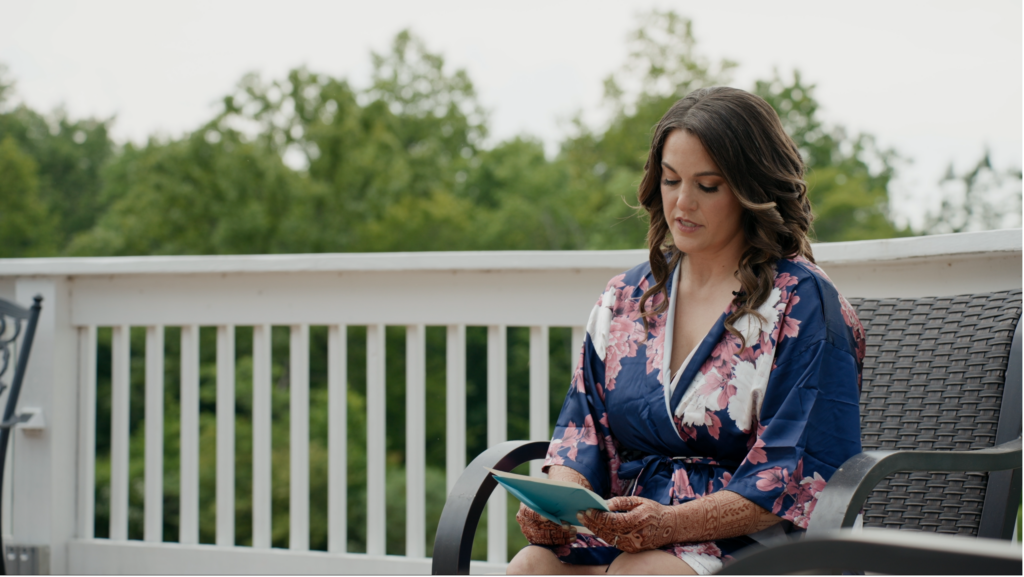
Speaking of the use of three cameras, Camera A captures a medium shot (with a focal length of 24-35mm) using a gimbal. There are several shooting techniques at your disposal, from stationary framing to crafting seamless camera movements in diverse directions. These cinematic movements can then be chosen for incorporation into the highlight reel.
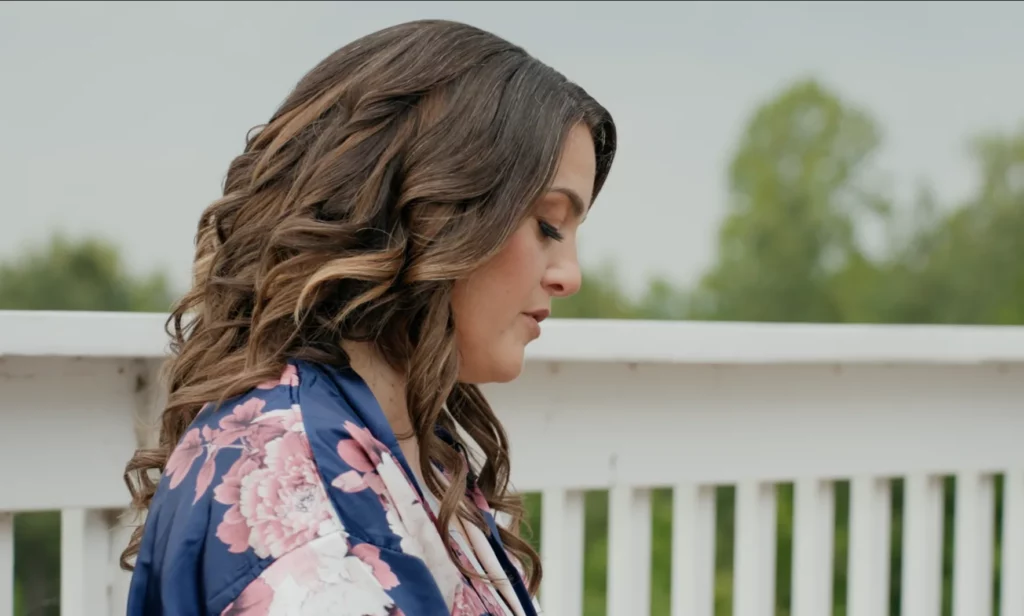
Camera B is responsible for capturing close-ups (using a focal length spanning from 50mm to 200mm). These shots can be handheld or mounted on a monopod, emphasizing the groom’s (or bride’s) face or the letter. It’s acceptable to have some slight shake, but don’t forget to activate the “Active” mode to stabilize the camera during filming. This step is crucial since there’s a limited chance of stabilizing close-up shots during the post-production phase.
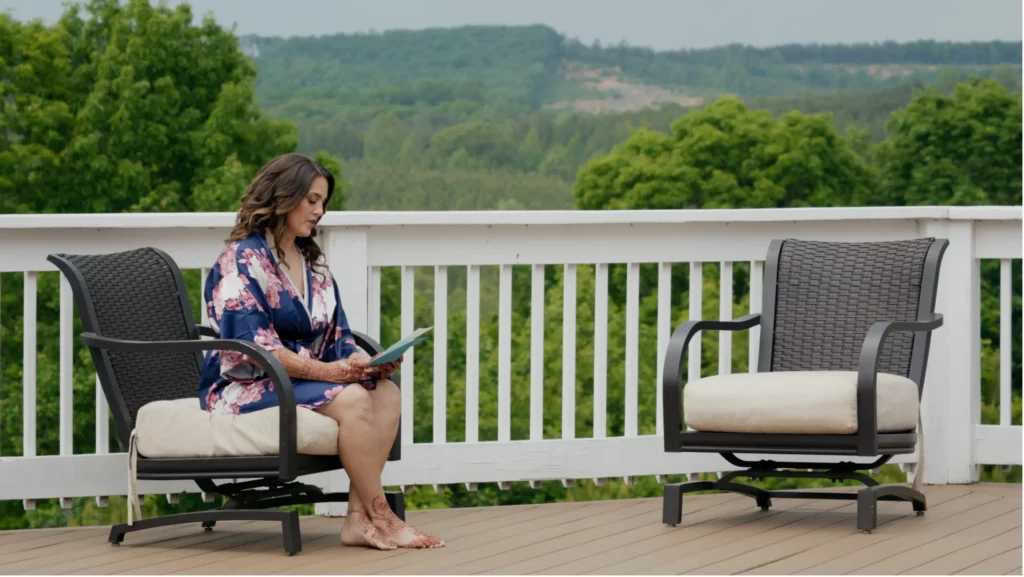
Camera C captures wide-angle shots to present the groom or bride in full height, along with the surrounding space (with a focal length of 16-24mm). Remember to also capture audio, as it holds equal significance (High-Quality Audio for Wedding Video). While recording, it’s recommended to uphold absolute silence, as lavalier microphones capture all ambient sounds around the speaker. Any disruption from external noises will compromise the recording quality.
Ceremony
When it comes to the vows during the ceremony, three cameras typically do the job.
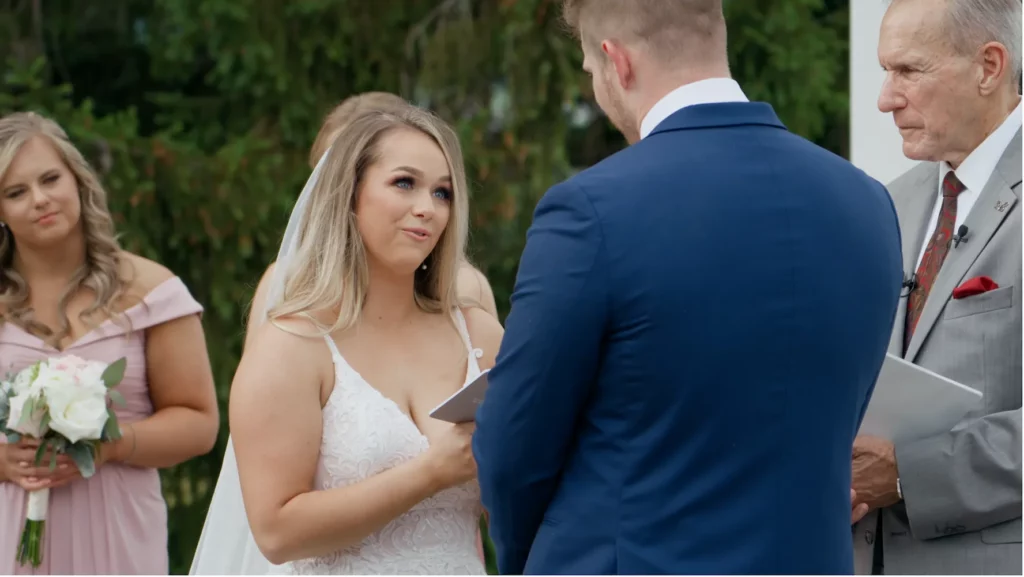
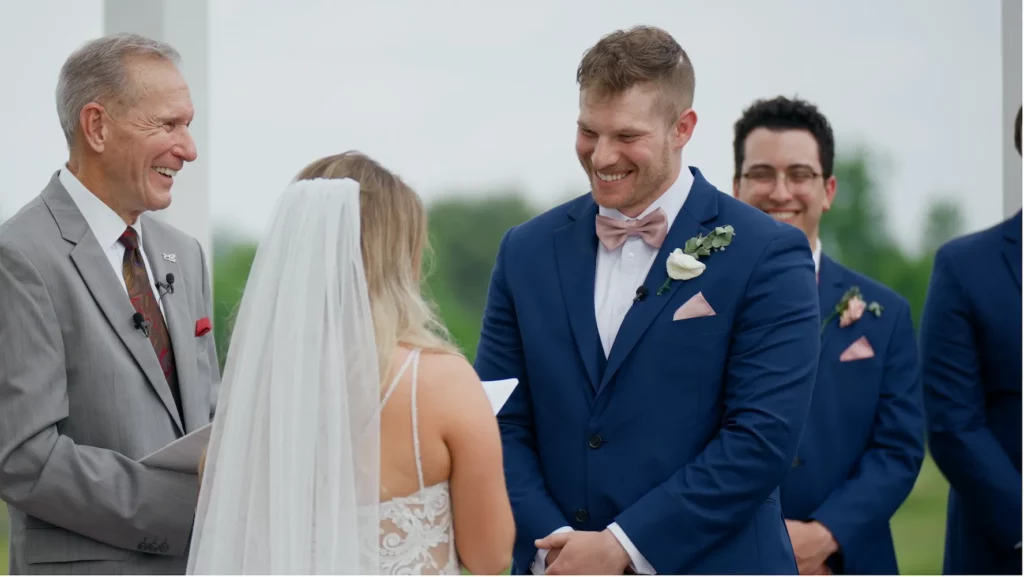
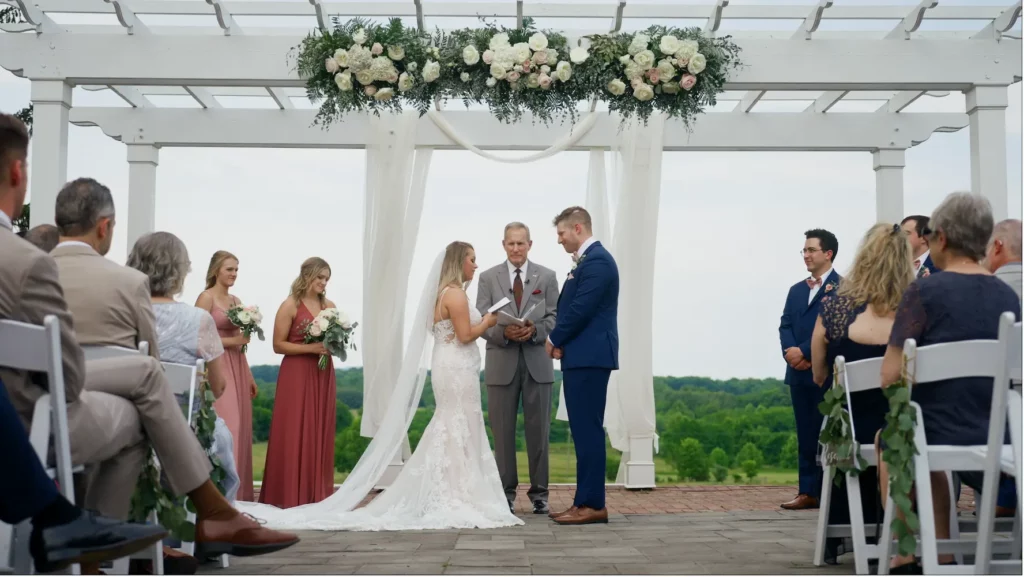
Nevertheless, Cameras A and B should focus on capturing medium or close-up shots using the widely-used editing and filming approach referred to as “figure eight” (a technique we recently covered in an article about common editing principles). Camera C also captures expansive shots, affording the view of the groom and bride standing at their full height from a side angle.
Speeches
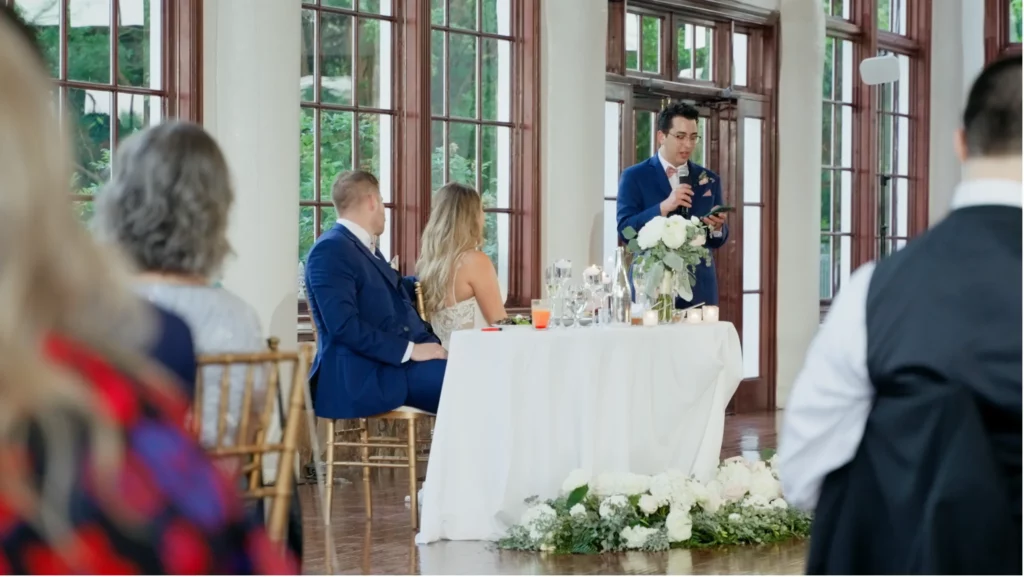
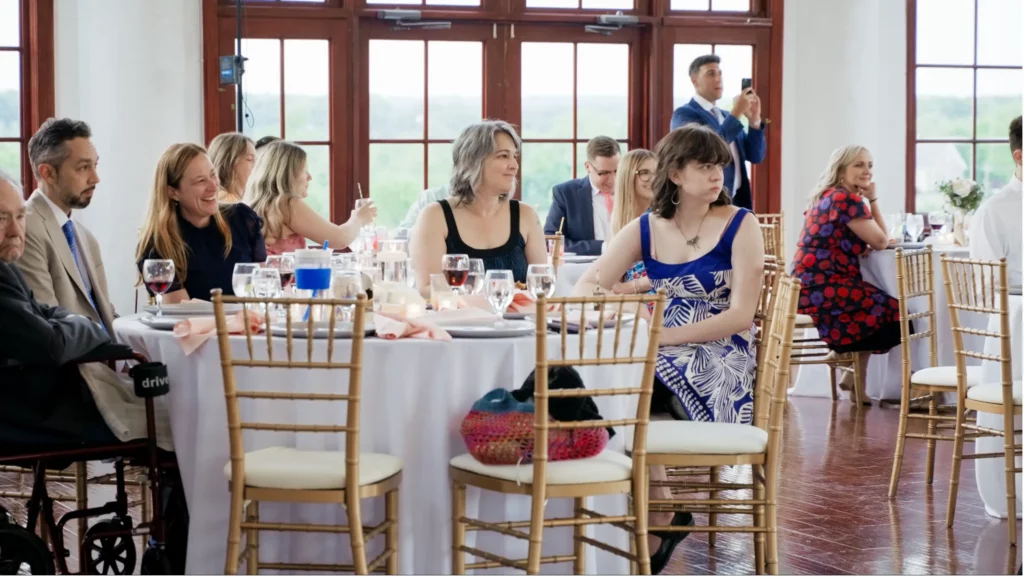
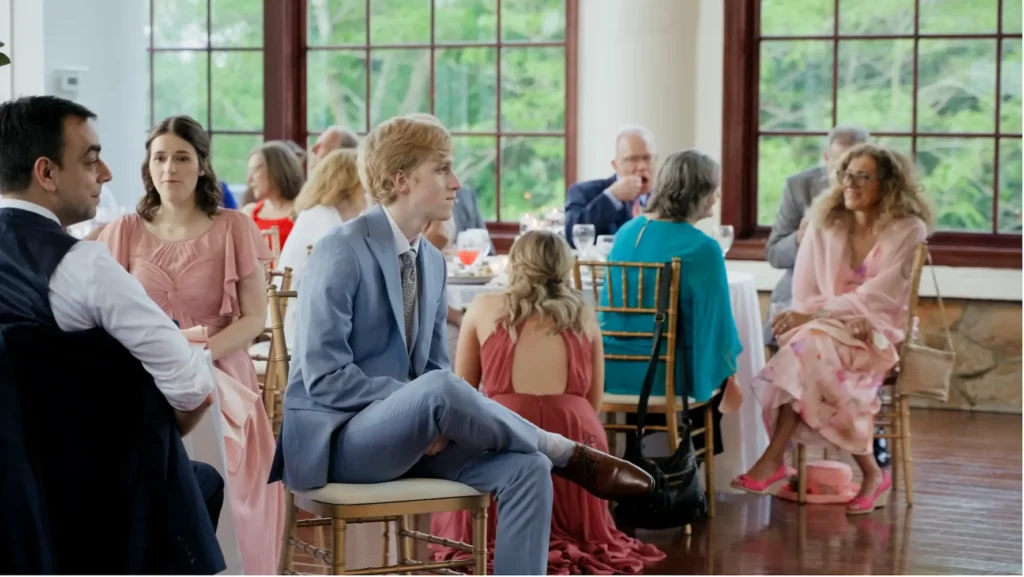
When it comes to the speeches, utilizing up to 4 cameras is advisable.
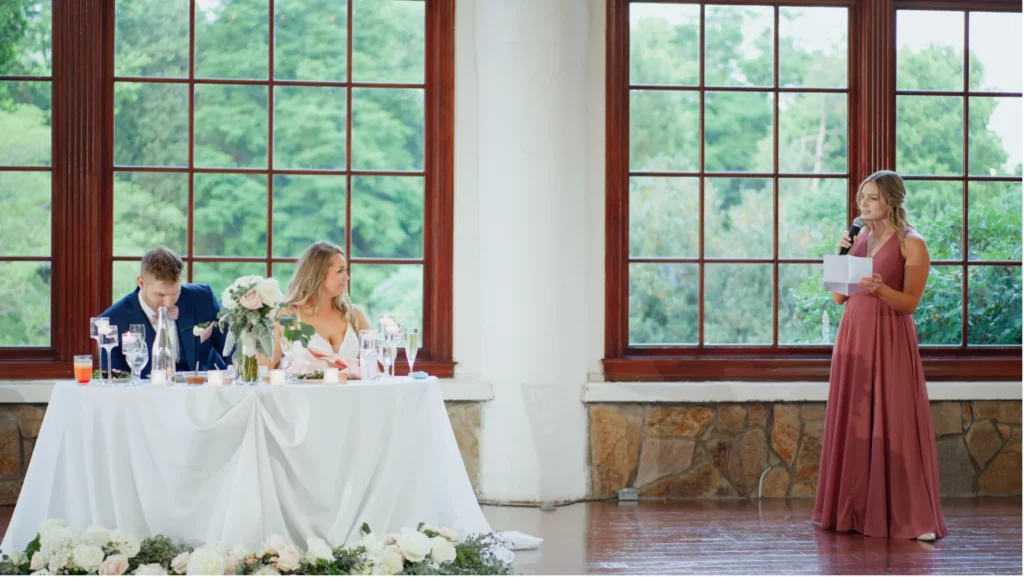
Either Camera A or B (the choice isn’t overly significant) can capture the audience’s responses to the speaker.
Another camera can smoothly capture wide shots from a distinct area of the room, offering a glimpse of the event’s overarching ambiance. Periodically, it’s a good idea to include a wide shot featuring the speaker and the couple’s table.
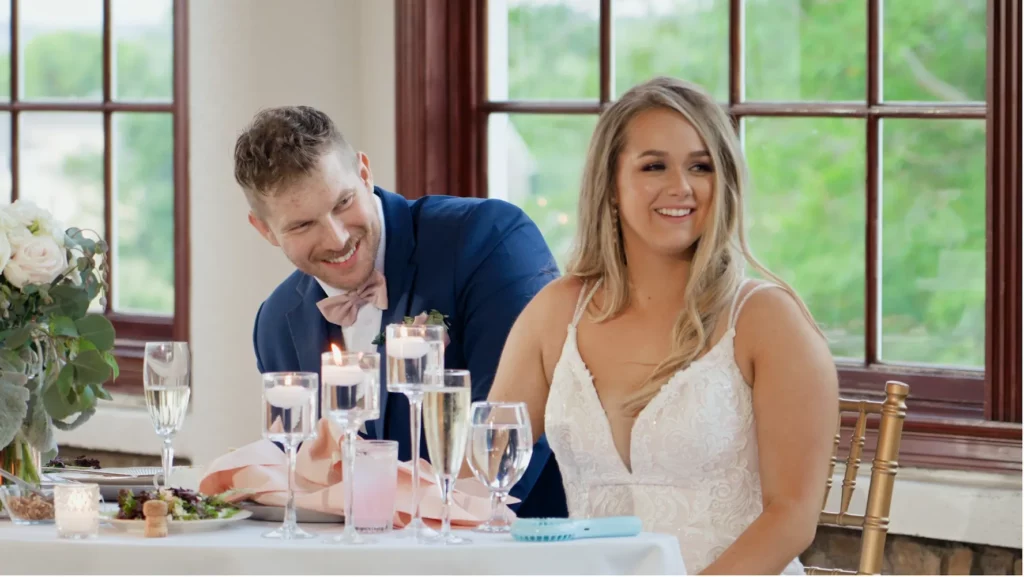
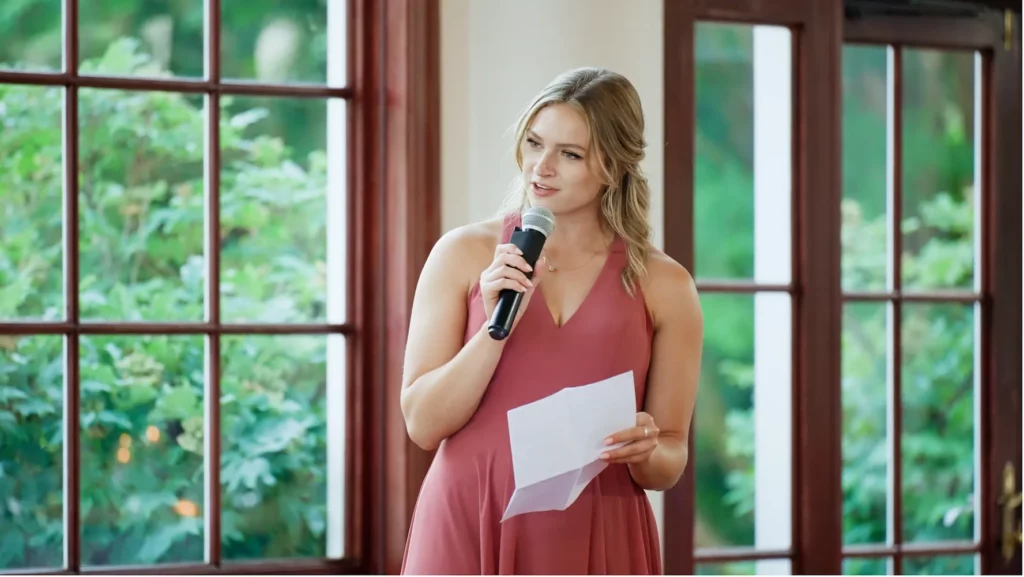
Camera C is responsible for capturing the couple’s reactions in medium (or close-up) shots, while Camera D is dedicated to focusing on the speaker in medium or close-up shots.
By employing the suggested filming approach, we’ll capture your vows and speeches in the best possible way for your highlights, which we’ll gladly edit for you.
Narrative Structure in Wedding Highlights
The use of vows and speeches in the wedding highlights also helps to provide a narrative structure. They can serve as a starting point, the climax, or the conclusion of the story. This narrative aspect can help to create a more engaging and meaningful video that goes beyond simply capturing the day’s events. With the vows and speeches as narration, the wedding video becomes a story, not just a sequence of events.
As a general practice, vows usually take center stage in the first romantic part of the highlight reel. Here, viewers can be touched by the unfolding moments, complemented by the inclusion of heartfelt wishes from the speakers’ speeches. For example, a father might reminisce about heartwarming memories from the bride’s childhood and bestow blessings upon the marriage, sharing words of wisdom with the couple.
In the second part, the couple and wedding guests engage in lively celebrations and revelry, It’s in these instances that lighthearted anecdotes from the speeches shine the brightest. This is how the finest narratives are crafted for wedding highlights.
Timeless Keepsake
In the end, incorporating vows and speeches into the wedding video yields a timeless keepsake that couples and their families can treasure for years to come. These spoken commitments and heartfelt expressions will stand as an enduring reminder of the love, happiness, and sentiment that graced their special day. It’s a beautiful method to commemorate a significant occasion and craft a lasting token that will be held dear long after the wedding day fades.
Speeches as a Distinct Wedding Film
Speeches are no longer just a part of the highlights; they are a separate cinematic experience. With each passing year, this format gains popularity among newlyweds who yearn to immortalize their heartfelt expressions of love, gratitude, and lifelong commitment. It’s about preserving those emotional moments in a dedicated film that stands the test of time. In a world where moments slip away like sand through fingers, such films can ensure your wedding speeches endure forever.
Summary
In summary, vows and speeches transcend mere tradition in Anglophone weddings. They are manifestations of love, dedication, delight, and anticipation for the future. They infuse depth and richness into the wedding narrative, making the ceremony and reception unforgettable not only for the couple but also for all attendees and viewers.
—
FAQs
What if a couple didn’t write personal vows? Would the highlight film still work?
A strong wedding video is still possible without them; the edit simply leans harder on visuals, music, and pacing. Spoken words are the most powerful narrative tool an editor has, though, so consider alternatives: private letters read before the ceremony, or heartfelt reception speeches, can carry the story just as well as vows would.
Can editing rescue vow or speech audio that came out badly?
Sometimes, but don’t count on it. Background hum and mild noise can be reduced in post-production, while speech buried under wind, chatter, or music is often unrecoverable, because lavalier mics capture everything around the speaker. Have your editor assess the audio before you promise the couple anything, and treat quiet during letter readings as cheap insurance on the day.
Is one camera enough to film wedding vows?
It can work, but it boxes in the edit. With a single angle there’s nowhere to cut when a speaker stumbles or a photographer crosses the frame, and reactions get lost entirely. Two cameras give the editor real options; three covers a letter reading or ceremony comfortably without adding much complexity on the day.
The wedding speeches ran long. Does everything end up in the highlight?
No, and it shouldn’t. A highlight film uses selected moments: a touching line from a father here, the best man’s sharpest joke there, woven into the story where they land hardest. If the full speeches matter to you, order them as a dedicated speeches edit alongside the highlight, so nothing meaningful is lost to the cut.
—
Terminology
Gimbal – a motorized stabilizer that keeps the camera steady while the videographer moves. It makes smooth, gliding shots possible during letter readings and other emotional moments at a wedding.
Focal length – a lens measurement, shown in millimeters, that controls how wide or zoomed-in a shot looks. Shorter focal lengths like 16-24mm capture the whole scene, while longer ones like 50-200mm bring you close to a face or a handwritten letter.
Lavalier microphone – a small clip-on mic, usually hidden on the groom’s lapel or near the speaker, used to record vows and speeches clearly. It picks up every sound nearby, which is why quiet surroundings matter so much during the recording.
Figure eight – a filming and editing approach where two cameras face the couple from opposite angles and the edit cuts back and forth between them. During a wedding ceremony, it lets viewers see both partners’ faces as the vows are exchanged.
Monopod – a single-leg camera support that steadies close-up shots without the bulk of a tripod. Videographers often use one for long lenses during vows when handheld footage would be too shaky.